
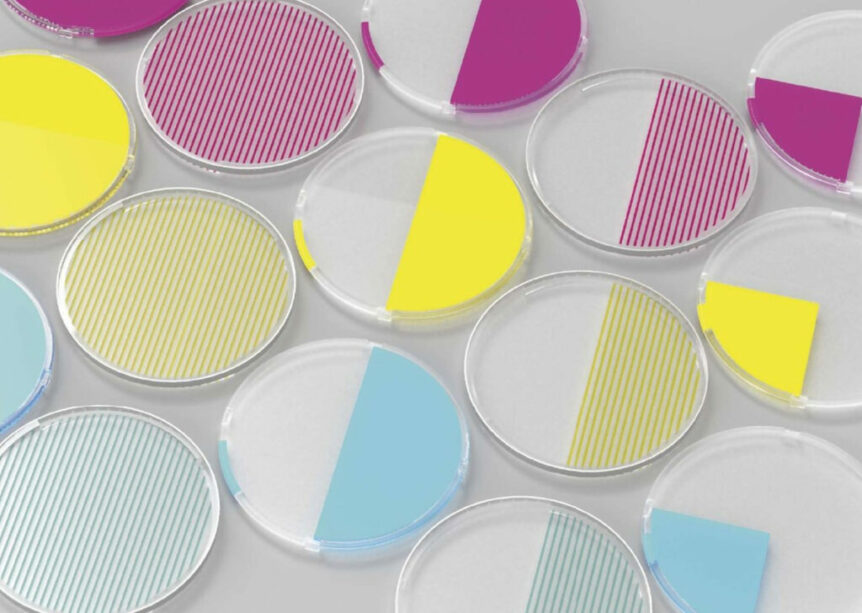
One of the world’s most influential design awards, widely regarded as the “Oscar of Design,” the Red Dot Award: Design Concept 2026 has announced its winners. Students from the Department of Product Design at Ming Chuan University (MCU) have earned a prestigious Red Dot Winner award for their graduation project, CO-ROUND: Visual Color-Mixing Learning Kit.
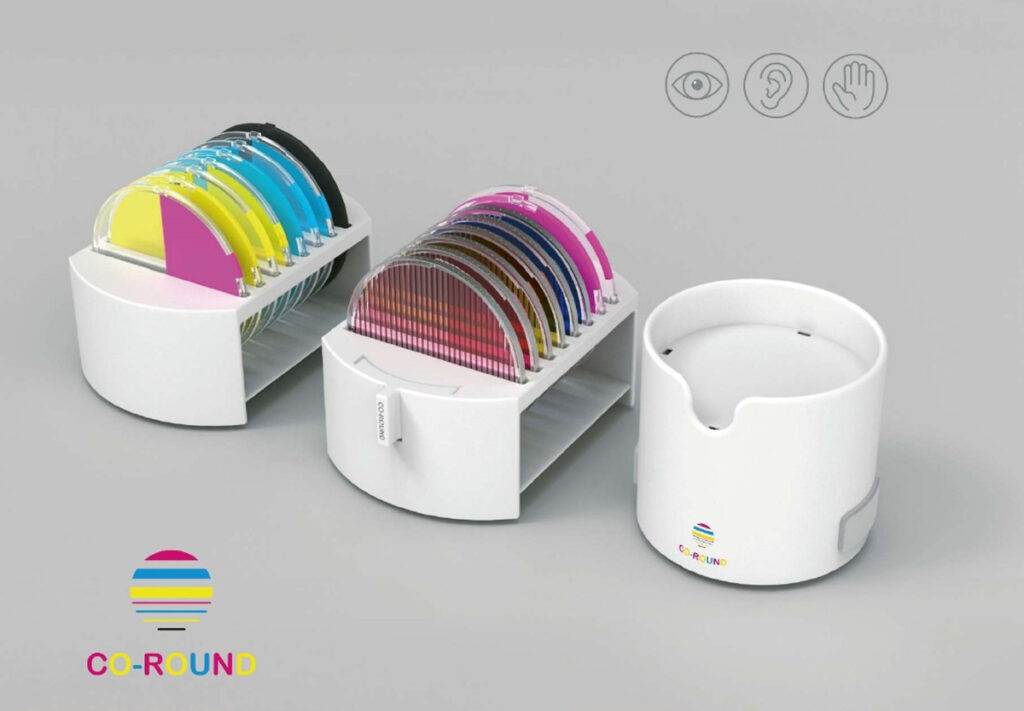
The graduation project was created by senior students Meng-Ling Fan and Ju-Yuan Chang, under the guidance of Professor Hsiang-Ping Wu. CO-ROUND is an educational tool designed to introduce young children to the concept of visual color mixing.
By rotating and layering different color discs, children can observe how colors change through variations in proportion and arrangement, helping them understand color as a dynamic visual phenomenon. When the discs featuring line patterns are rotated, the device also produces delicate, bell-like musical sounds, creating a multisensory learning experience that combines visual and auditory stimulation. Through its modular design, CO-ROUND transforms abstract color concepts into hands-on exploration, allowing children to discover and understand color variations through interactive play.
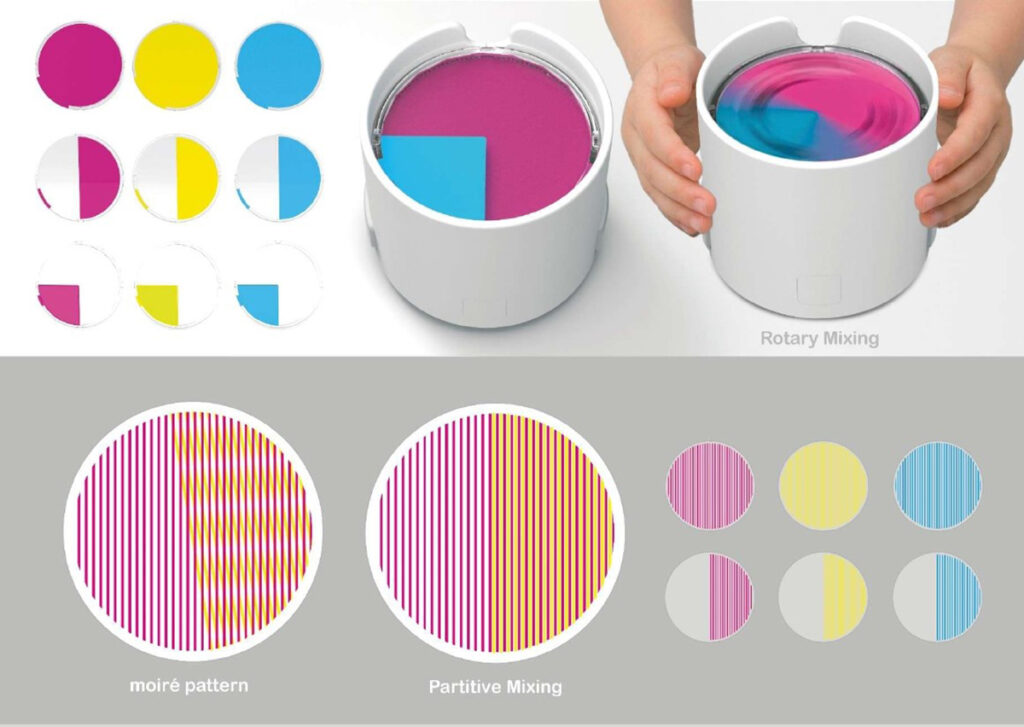
The design was inspired by the color-mixing phenomenon known as optical color blending, in which different colored threads are woven together and perceived as a combined color. Recognizing the lack of educational tools that effectively demonstrate this phenomenon, the team integrated rotational color mixing into the design to create an interactive visual learning kit. To ensure safety and ease of use for children, durable acrylic discs were fabricated using laser cutting. Carefully designed line patterns and offset arrangements create the optical effect of color blending when the discs are layered. Semi-circular color pieces are also included to help children compare colors before and after mixing.
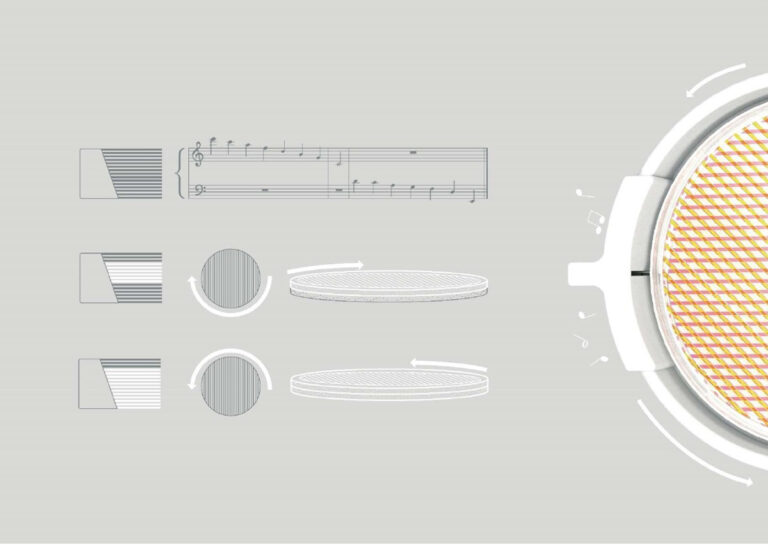
The project further incorporates optical and acoustic principles. As the discs rotate, they produce an optical phenomenon known as a Moiré pattern. The patterns interact with small bumps along the edges of the discs, which activate a musical ring to generate sound. When the interference patterns become denser, higher-pitched sounds are produced; when the patterns become less dense, the sounds become lower in pitch. Through synchronized visual and auditory feedback, children can explore the science of color in a safe, engaging, and playful environment, enhancing both their understanding and learning experience.
Source: Ming Chuan Weekly